GPT-6 Astra cracks a 1918 German cipher no one had solved
OpenAI's model decoded an unsolved 108-year-old WWI radio cipher. The decryption checks out, but the key's dates don't fit neatly.
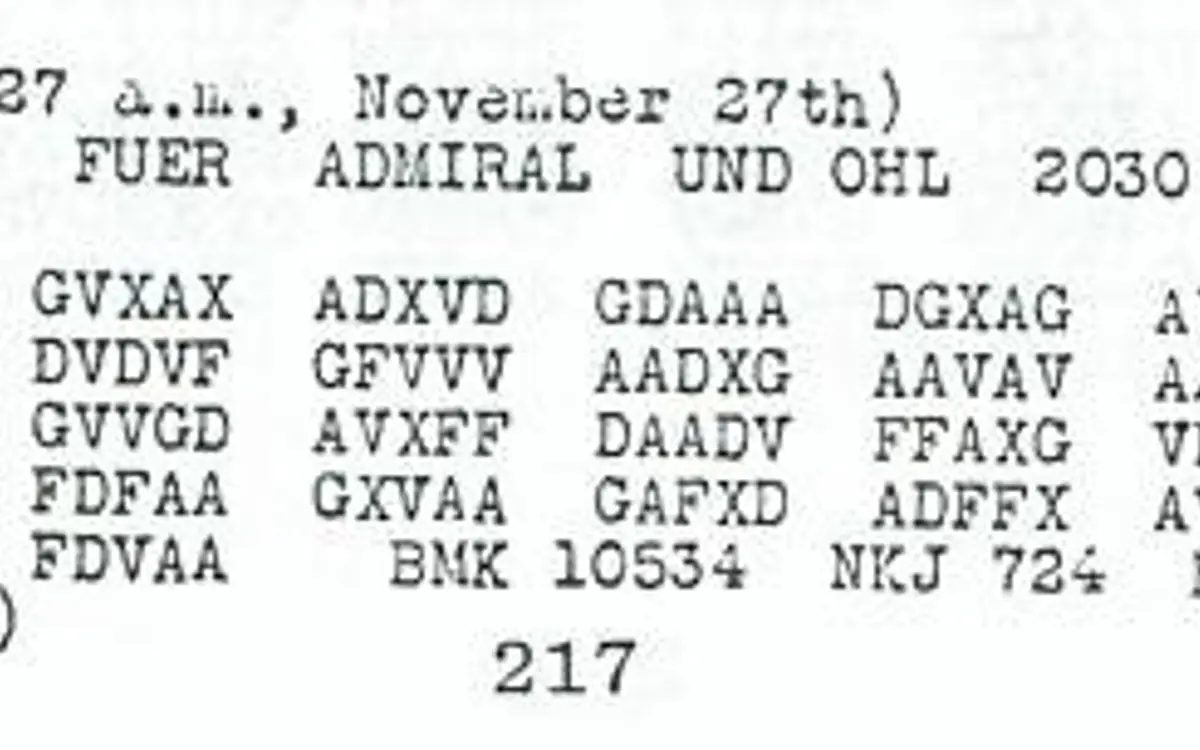
GPT-6 Astra has decrypted a German radio message from 27 November 1918 that was one of roughly 20 still-unsolved ADFGVX ciphers from late in the war. The plaintext reads: "An English cruiser docked at Sevastopol on the 24th. An allied squadron follows on the 26th."
Royal Navy records back it up: HMS Canterbury reached Sevastopol on 24 November 1918, and an Allied squadron arrived two days later. The message is only 170 symbols long. Astra found the right key, TRUPPENVERSCHIEBUNG, rebuilt the ADFGVX substitution and transposition, and then checked the result against archive sources on its own. An independent re-check on GitHub re-ran the decryption on the archive's own ciphertext and got the same plaintext.
There is a catch. The keyword comes from J. Rives Childs's history of German WWI ciphers, which lists it as in use from 9 December 1918, twelve days after this message was sent. That mismatch probably explains why codebreakers never tried this key on the message. It also means this was finding and applying a known key, not a break from the ciphertext alone. Either the recorded key period or the message date is wrong, and no archive has yet marked the message solved. It follows Astra's decryption of a 1941 Enigma message that had gone unsolved for 83 years, and that break has been officially confirmed.
Why it matters: patiently testing hypotheses across old archives, the grind human historians skip, is turning into a real AI research skill.
Sources
- GPT-6 Astra might have cracked a World War I radio cipher runtimewire.com
- cipher-break-verification: independent re-checks of AI-assisted historical cipher breaks github.com
- GPT-6 Astra Solves a WWI German Radio Cipher prinzai.com
Written by an AI pipeline from the sources above. How it works.
Feed, daily deep-dive and bytes — readable offline, with push alerts for the topics you follow.