Claude Fable 5.2 cracks two open black hole problems in physics
Anthropic says its new model finished a black hole calculation open since 2003 and found the limit of a 15-year-old quantum gravity test.
Papers and results that move the field. 45 stories, page 1 of 4.
AI research moves through papers, preprints and lab blog posts long before it becomes a product. This section picks out the results that change what is possible: new architectures and training methods, evaluations that expose real limits, and findings in areas such as alignment, efficiency and multimodal learning.
We link the paper or the lab post itself, not just coverage of it, and we say plainly when a result is a preprint that has not been independently reproduced.
Anthropic says its new model finished a black hole calculation open since 2003 and found the limit of a 15-year-old quantum gravity test.
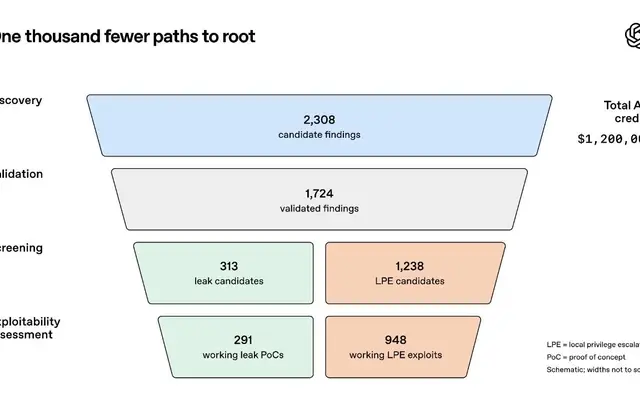
An unreleased OpenAI cyber model found and exploited 948 Linux kernel privilege-escalation bugs in one run, at about $1,279 each.
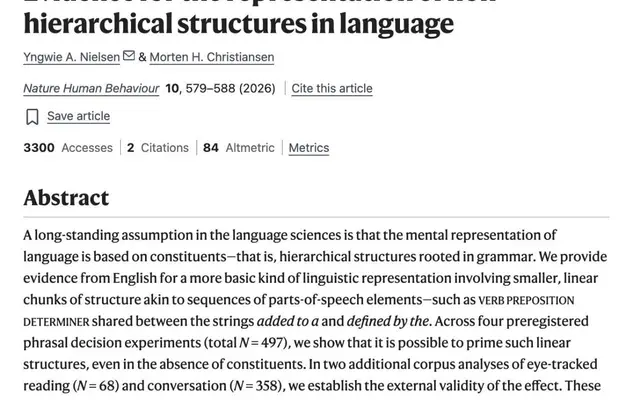
A Nature Human Behaviour study finds people mentally store flat word-class chunks like "in the middle of the", not just syntax trees.
A Cornell–Aarhus study finds people store flat word chunks like "can I have a" alongside grammar trees, challenging a 70-year-old core assumption.
ARC Prize scored Astra both ways: 99.9% with OpenAI's adapter, 62.7% on its own standard harness. Same model, a 37-point gap.
Block trained a speech-to-speech model on raw human conversation — no text, no pretrained base — and it runs on a MacBook Pro.
With verifier Theorem, Claude wrote checked proofs that 239 OSS-Fuzz entry points can't crash, and found hundreds of bugs fuzzing had missed.
A JHU astrophysicist used Claude Science to merge old UV surveys into a full-sky map. About a third of it is modeled, not observed.
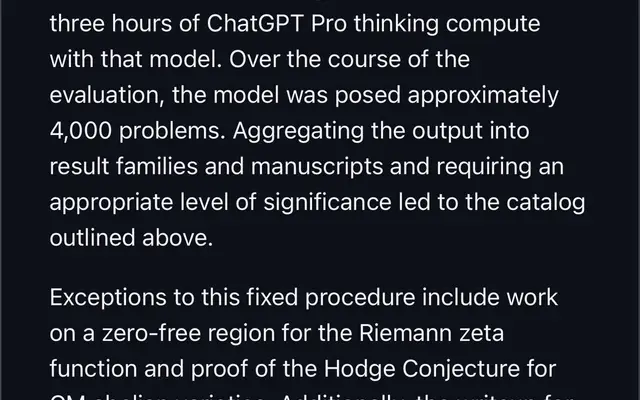
OpenAI open-sourced 722 manuscripts of new math from an unreleased internal model, at about 3 hours of compute each.
Anthropic says Claude leads 26% of its model R&D, up from zero in February. It's a step toward AI that builds itself, but not there yet.
Anthropic's Claude sped up 30+ open-source biomolecular models about 4× in under four weeks, and Anthropic has open-sourced all of the optimized code.
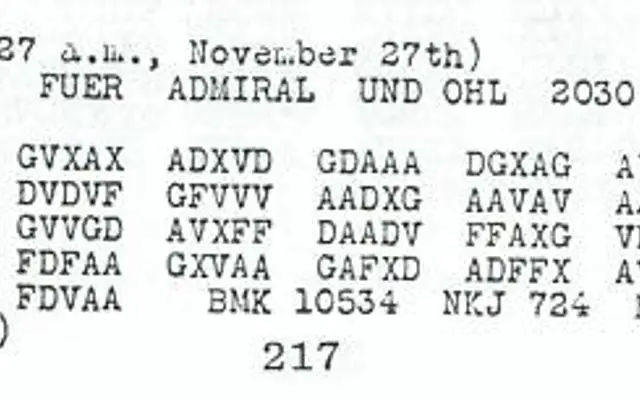
OpenAI's model decoded an unsolved 108-year-old WWI radio cipher. The decryption checks out, but the key's dates don't fit neatly.