Apple asks judge to put OpenAI under forensic supervision
Apple wants a preliminary injunction plus court-ordered forensic monitoring of OpenAI over alleged trade secret theft.
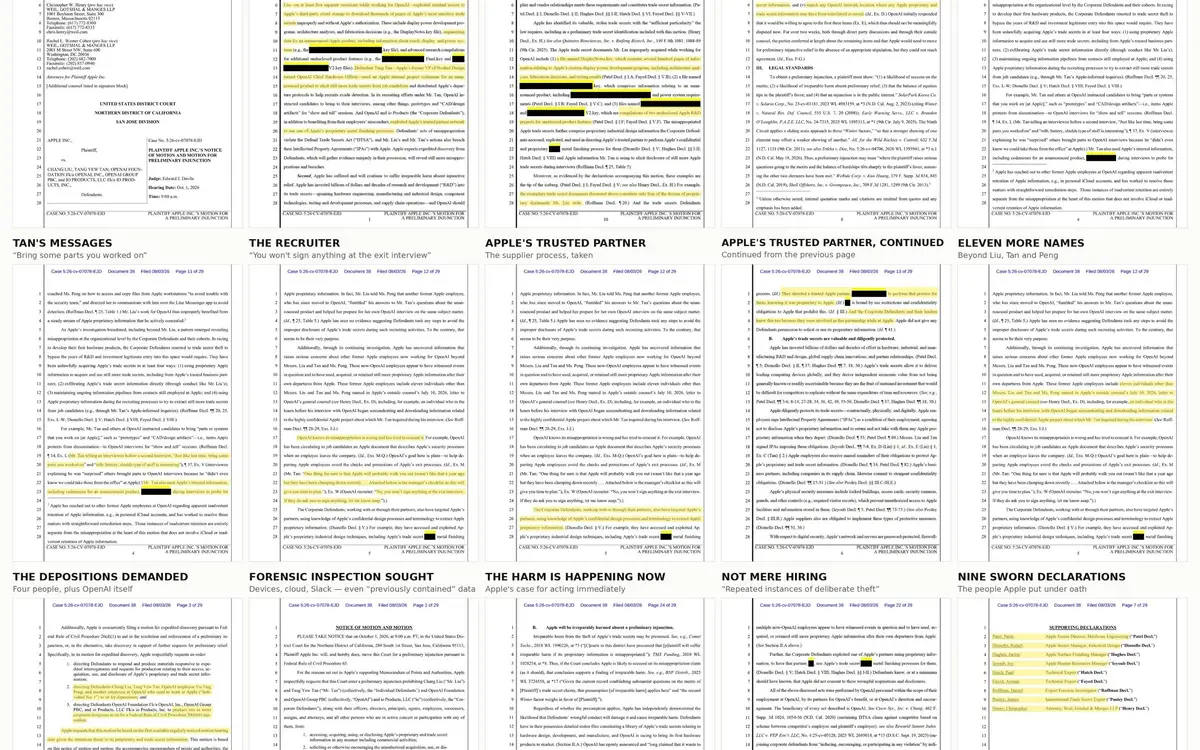
Apple has escalated its fight with OpenAI from a lawsuit to a demand for emergency relief. The company filed a motion for a preliminary injunction to stop what it calls "the theft of its trade secrets," backed by nine sworn declarations and a 28-page memorandum — plus a concurrent motion for expedited discovery.
The unusual part isn't the injunction. It's the request to place OpenAI under forensic supervision, which would mean court-supervised inspection of OpenAI's systems and devices. That's a remedy normally reserved for cases where a judge is convinced evidence is at risk of walking out the door. Nine declarations and a rush on discovery signal Apple thinks it can name specific people and specific files, not just gesture at a vague competitive overlap.
Preliminary injunctions are hard to win — Apple has to show likely success on the merits and irreparable harm. But even a partial win reshapes the fight: forensic access would give Apple visibility into OpenAI's internal development well before trial.
Why it matters: if courts start granting forensic supervision in AI talent-and-trade-secret disputes, the industry's revolving door between labs gets a lot more expensive.
Sources
Written by an AI pipeline from the sources above. How it works.
Feed, daily deep-dive and bytes — readable offline, with push alerts for the topics you follow.