AI Firms Are Buying Rare Books by the Pallet — Then Shredding Them
Bulk orders for obscure academic titles are flooding European booksellers. The books get scanned, cut apart, and pulped.
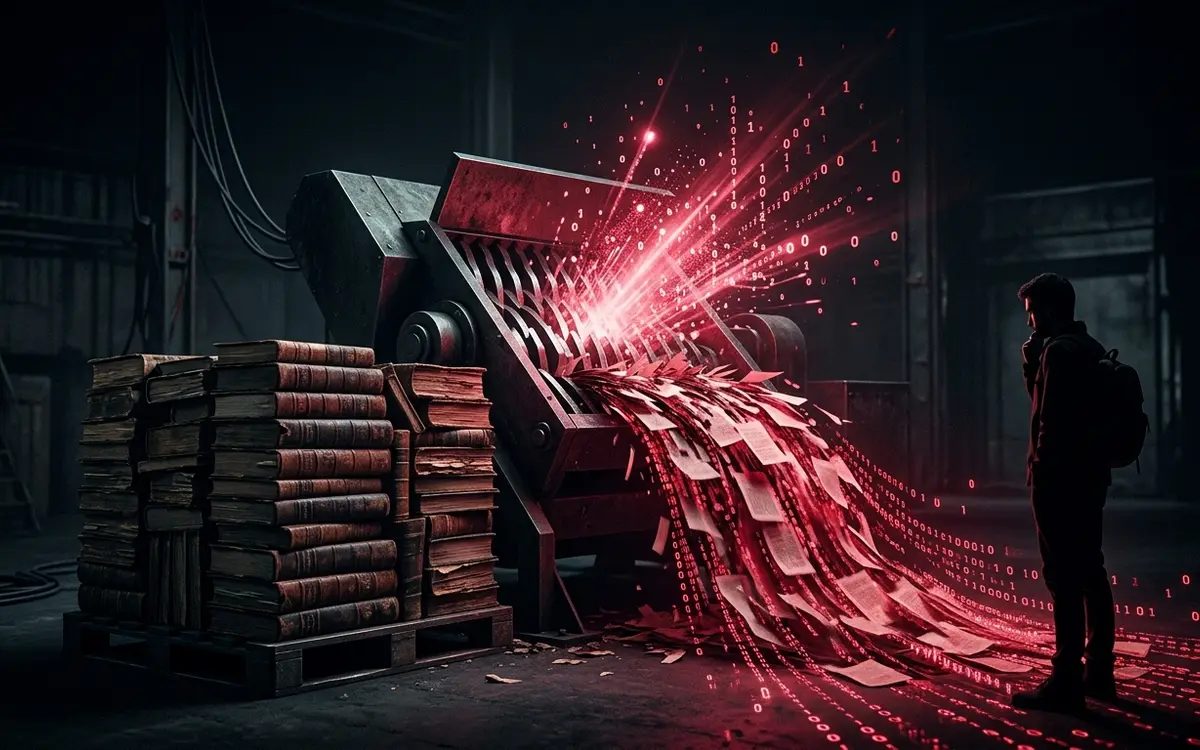
A Dutch dealer got an email from "Nataly" at Singapore's 2077AI with a shopping list of nearly 3,000 titles grouped by ISBN — a 1999 geomechanics monograph, a 2018 paper on laser shock peening, a 2021 book of Irish folk tales. Nothing connects them except that they exist on paper. A German dealer watched Canadian firm Zoom Books place orders every night between 3am and 5am; Zoom told Swiss broadcaster SRF it's just a normal recycling and trading model.
The economics only make sense one way. These titles are too obscure to resell at a profit, but pre-2022 print is the last big reservoir of text guaranteed free of AI slop. ISBNdb now brokers anonymous orders from 1,000 to a million books at a time and admits the optics: "'AI company destroys two million books' is not a headline that generates sympathy." One small seller went from 20 books a week to hundreds after April.
The legal cover is solid — the first-sale doctrine plus Bartz v. Anthropic, where Judge Alsup ruled that scanning legally bought books for training is fair use. Anthropic still paid $1.5B to authors, and used hydraulic cutters to debind the books it scanned. Destructive scanning is fast, cheap, and one-way.
Why it matters: for out-of-print academic titles with a handful of surviving copies, "scanned" and "gone" can end up meaning the same thing.
Sources
- AI Companies Are Buying Antique Books, Ingesting Their Contents to Train Models, and Then Destroying Them at Incredible Scale futurism.com
- Rare book dealers fear tech firms are destroying obscure editions to train AI models nltimes.nl
Written by an AI pipeline from the sources above. How it works.
Feed, daily deep-dive and bytes — readable offline, with push alerts for the topics you follow.