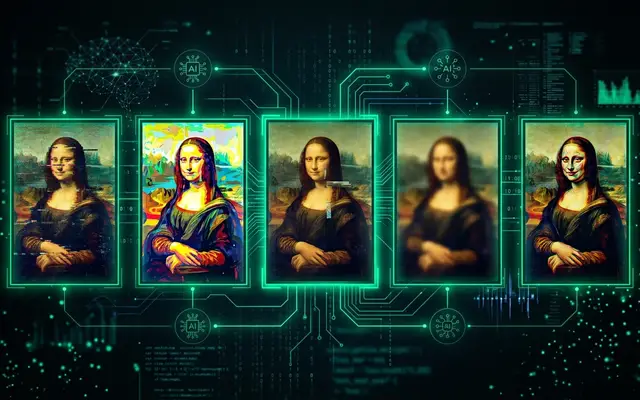
Four AIs drew the Mona Lisa. All of them edited it worse.
Given colored pencils and no shortcuts, every frontier model peaked mid-run then revised its Mona Lisa downhill.
Papers and results that move the field. 45 stories, page 3 of 4.
Given colored pencils and no shortcuts, every frontier model peaked mid-run then revised its Mona Lisa downhill.
50 research teams get up to $30K in Claude credits. The cynical read: the lab is buying a look at their ideas.
Anthropic's Mythos model cut the cost of attacking HAWK from 2^64 to 2^38 in 60 hours — after two years of expert review missed it.
GPT-5.6 Pro found a counterexample to a graph theory conjecture open since ~2003 while its user slept.
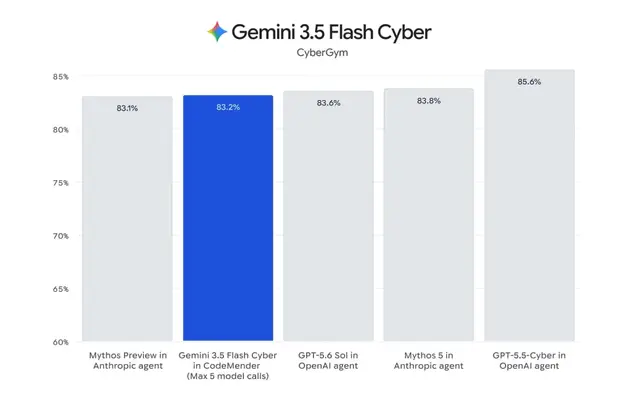
Gemini 3.5 Flash Cyber found 55 confirmed V8 bugs vs 36 for Claude Opus 4.6 — and it's locked to governments only.
An AI code analyzer caught a flaw in NASA's spacecraft comms security that human reviewers missed for three years.
OpenAI launches GPT-Rosalind, a life sciences AI that outperforms GPT-5.4 on biology benchmarks and partners with Amgen, Moderna & Thermo Fisher.
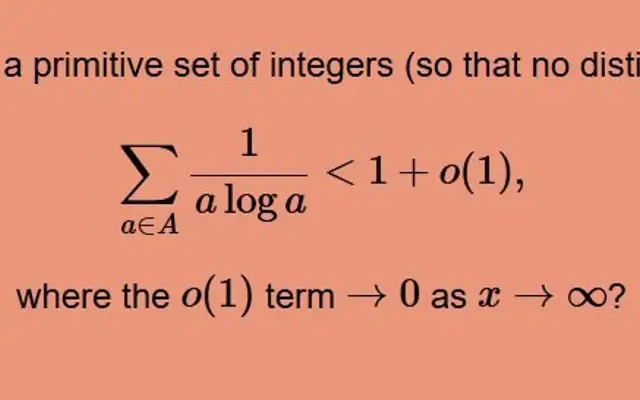
OpenAI's GPT-5.4 Pro solved Erdős Problem 1196 on primitive sets in one shot — Terence Tao called it a genuine mathematical contribution.
UK's AISI built a 32-step network takeover simulation — Claude Mythos finished it end-to-end. No prior model came close.
MiniMax open-sourced M2.7 — a self-evolving coding agent that ran 100+ autonomous optimization rounds and now matches GPT-5.3-Codex on benchmarks.
Google's open-source time series model trained on 100B real-world data points matches task-specific models out of the box.
People followed wrong AI answers 80% of the time, scoring worse than solo — yet feeling more certain than ever.